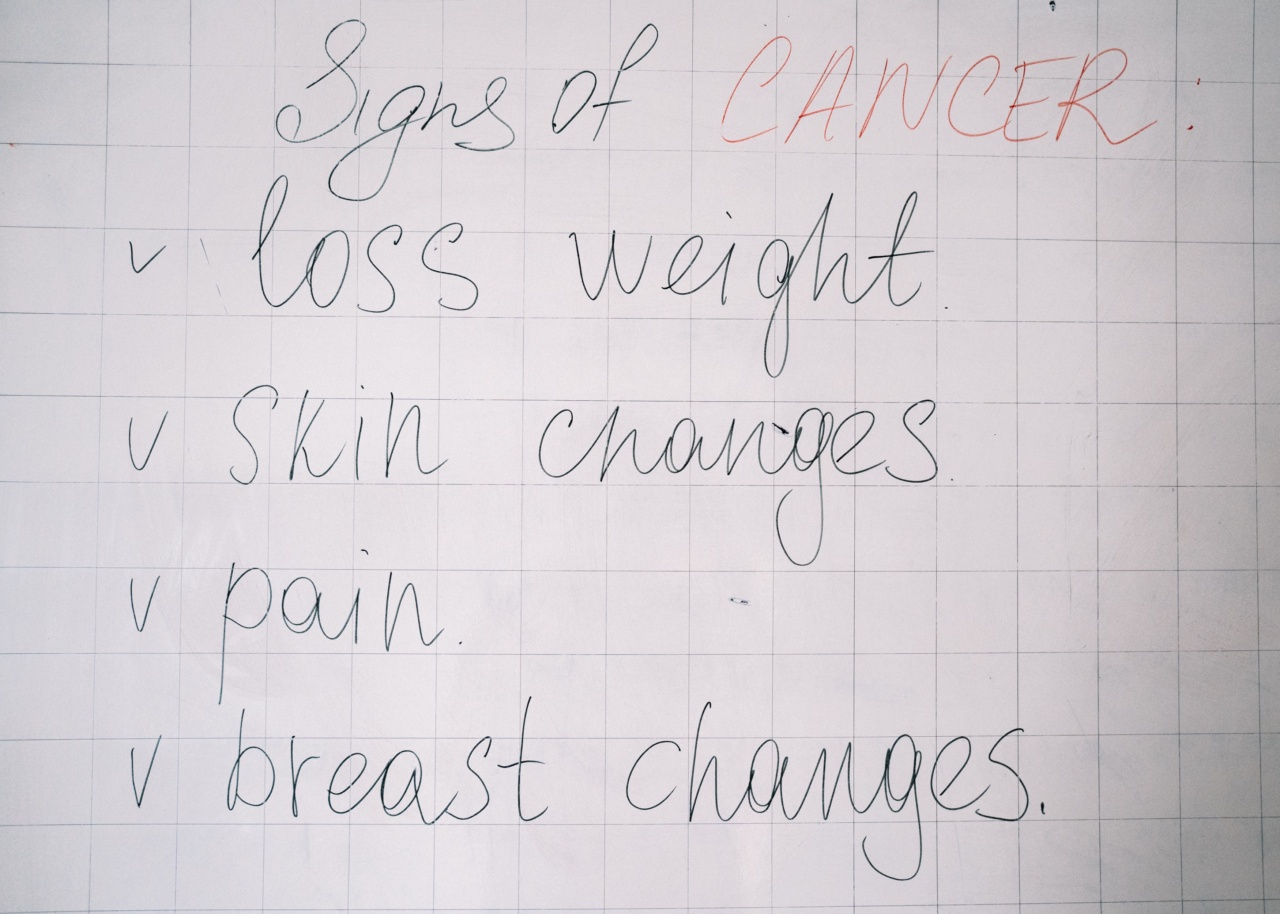
Esophageal cancer is a type of cancer that develops in the esophagus, the muscular tube that connects the throat to the stomach.
It is important to recognize the early symptoms of esophageal cancer as early detection can significantly improve the chances of successful treatment. Here are some common symptoms to be aware of:.
1. Difficulty Swallowing (Dysphagia)
One of the most prominent symptoms of esophageal cancer is difficulty in swallowing or dysphagia. As the tumor grows, it can narrow the esophagus, making it increasingly difficult for food and liquids to pass through.
Initially, dysphagia may only occur with solid foods, but as the cancer progresses, even swallowing liquids can become problematic.
2. Unintentional Weight Loss
Unexplained weight loss is often a symptom associated with various types of cancer, including esophageal cancer. Cancer cells consume energy and nutrients from the body, causing weight loss.
If you find yourself losing weight without making any significant changes to your diet or exercise routine, it is essential to consult a healthcare professional for further evaluation.
3. Chest Pain or Discomfort
Esophageal cancer can cause chest pain or discomfort, which is usually felt behind the breastbone or sternum. The pain can be sharp, burning, or pressure-like in nature.
It may worsen with swallowing or when lying down, and can sometimes be mistaken for heart-related pain. If you experience persistent chest pain, it is crucial to seek medical attention to determine the underlying cause.
4. Chronic Cough
A persistent cough that lasts for an extended period, especially if accompanied by blood-streaked sputum, may indicate esophageal cancer. The tumor can irritate the respiratory system, leading to a chronic cough.
If you have a cough that lasts for more than a few weeks or notice blood in your cough, it is advisable to consult a doctor for an evaluation.
5. Hoarseness or Voice Changes
Changes in voice quality, such as hoarseness or a raspy voice, can be an early sign of esophageal cancer. The tumor can put pressure on the recurrent laryngeal nerve, which controls the muscles involved in voice production.
If you notice any persistent changes in your voice that do not resolve within a reasonable timeframe, it is necessary to be examined by a healthcare professional.
Related Article
Sweet solutions for iron deficiency anemia: The power of honey

6. Chronic Indigestion or Heartburn
Recurring episodes of indigestion or heartburn that do not respond to over-the-counter medications may warrant further investigation.
Esophageal cancer can cause chronic irritation and inflammation of the lining of the esophagus, leading to ongoing symptoms of indigestion or heartburn. If these symptoms persist or worsen over time, consultation with a healthcare provider is essential.
7. Regurgitation or Vomiting
Esophageal cancer can cause difficulty in keeping food down, leading to regurgitation or vomiting. The tumor can obstruct the passage of food from the esophagus to the stomach, causing it to come back up.
If you frequently experience regurgitation or vomiting after meals, it is crucial to discuss these symptoms with a medical professional.
8. Fatigue
Unexplained fatigue or extreme tiredness that persists despite adequate rest may be a sign of esophageal cancer. Cancer cells consume a significant amount of energy, resulting in exhaustion and fatigue.
If you notice prolonged fatigue, it is advisable to consult a healthcare provider for a thorough evaluation.
9. Iron-Deficiency Anemia
Esophageal cancer can cause chronic bleeding, which may lead to iron-deficiency anemia. Anemia occurs when the body lacks enough healthy red blood cells to carry sufficient oxygen to tissues and organs.
Symptoms of anemia include weakness, fatigue, shortness of breath, and pale skin. If you experience any signs of anemia, it is important to consult a healthcare professional for an accurate diagnosis.
10. Swollen Lymph Nodes
Enlarged lymph nodes in the neck or collarbone area can occur due to the spread of cancer from the esophagus. These swollen lymph nodes may feel palpable or tender to touch.
If you notice any unusual swelling or lumps in the neck or collarbone area, it is essential to seek medical attention for a proper evaluation.
Recognizing the symptoms of esophageal cancer is crucial for early detection and timely treatment. If you experience any of the symptoms mentioned above, it is important to consult a healthcare professional for a proper evaluation and diagnosis.


