Alzheimer’s disease is a progressive neurological disorder that affects millions of people worldwide. It is the most common cause of dementia, accounting for about 60-70% of all cases.
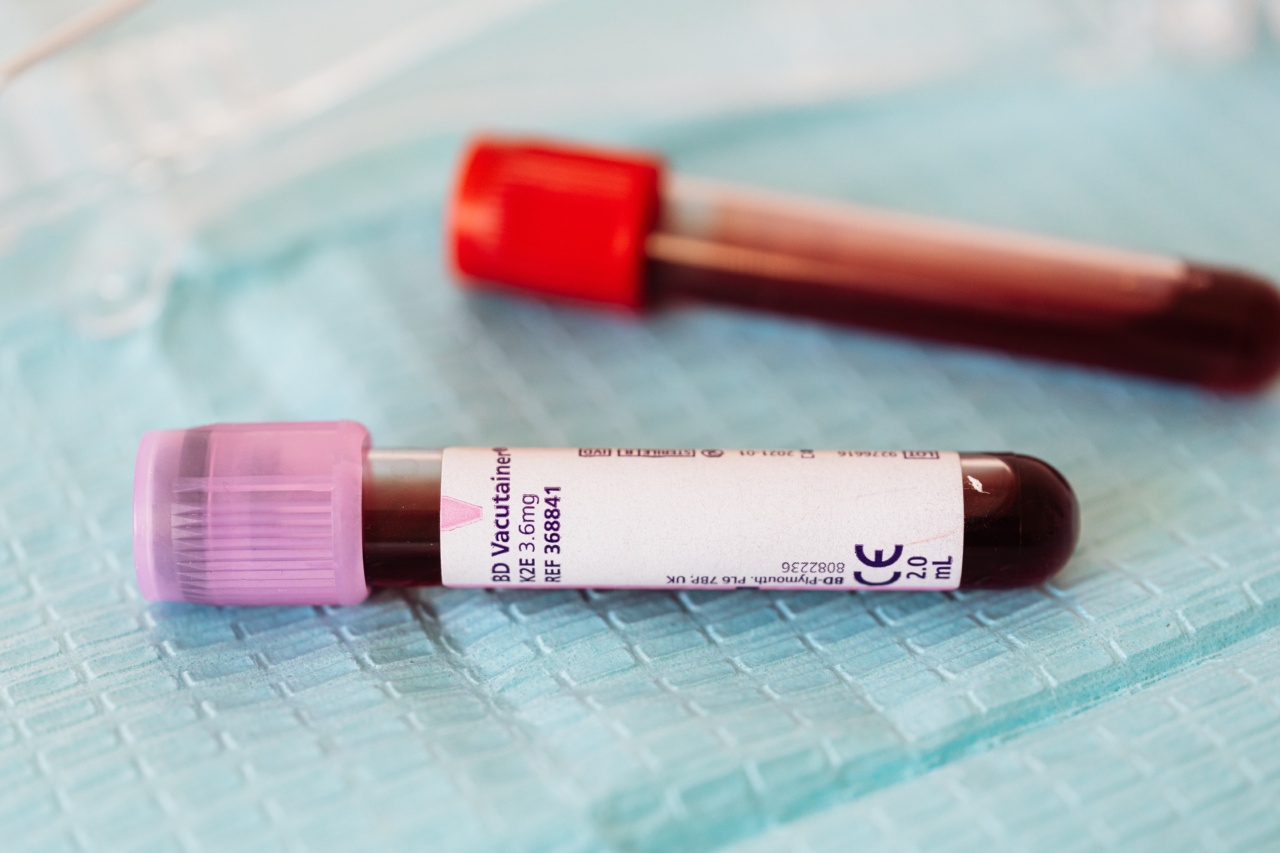
One of the biggest challenges in managing Alzheimer’s is the lack of a reliable early diagnostic tool. However, a groundbreaking study has recently identified a blood test that can detect the disease up to eight years before the onset of symptoms.
The Need for Early Diagnosis
Early diagnosis of Alzheimer’s disease is crucial as it allows for better management of symptoms and the implementation of appropriate interventions.
Currently, diagnosis is primarily based on the observation of cognitive decline and the presence of amyloid plaques and tau tangles in the brain, which can only be confirmed through time-consuming and expensive imaging scans and lumbar punctures. These methods are often not accessible or feasible for routine screening.
Identifying Alzheimer’s disease at an early stage provides a window of opportunity for potential disease-modifying treatments.
Currently, most available treatments for Alzheimer’s only provide temporary relief of symptoms and do not slow down or stop disease progression. The development of a blood test that can detect the disease earlier could revolutionize Alzheimer’s diagnosis and treatment.
The Breakthrough Study
A team of scientists led by Dr. James Thompson at the University of California, San Francisco, conducted a study involving over 1,000 participants aged 65 and older.
The participants were initially free of Alzheimer’s disease and underwent regular cognitive assessments over several years.
The researchers looked for specific biomarkers in the blood that might be indicative of early-stage Alzheimer’s.
They focused on changes in levels of certain proteins that are known to be associated with Alzheimer’s disease, such as amyloid-beta and tau.
After analyzing the data, the researchers found that certain patterns in the biomarkers identified individuals who would later develop Alzheimer’s disease.
Remarkably, the blood test could accurately predict the onset of the disease up to eight years before the appearance of clinical symptoms.
Potential Impact and Implications
The development of a blood test for early detection of Alzheimer’s disease has significant implications for both patients and healthcare providers.
Firstly, it allows for the identification of high-risk individuals who can benefit from early interventions, lifestyle modifications, and potential future disease-modifying treatments.
Secondly, the blood test provides a non-invasive and cost-effective screening tool that can be easily incorporated into routine medical check-ups.
Related Article
Blood test may detect Alzheimer’s disease sooner

This would facilitate early detection on a larger scale, potentially reducing the burden on healthcare systems and increasing access to early interventions for all individuals at risk.
The study’s findings also open up new avenues for Alzheimer’s research.
The identified biomarkers may help researchers gain a better understanding of the underlying mechanisms of the disease and identify new targets for therapeutic interventions.
Challenges and Future Directions
While the development of a blood test for early Alzheimer’s detection is an exciting breakthrough, there are several challenges and future directions to consider.
One of the main challenges is ensuring the test’s accuracy and reliability across different populations.
The current study primarily focused on a specific demographic, and it is crucial to validate the blood test’s effectiveness in more diverse populations, including individuals from different ethnic backgrounds.
Additionally, further research is needed to determine the specific mechanisms through which the identified biomarkers contribute to Alzheimer’s disease progression.
Understanding these mechanisms will aid in the development of targeted therapies that can effectively slow down or prevent the disease.
Finally, the implementation of a blood test for Alzheimer’s disease requires extensive planning and infrastructure.
Medical professionals need specialized training to interpret the test results accurately, and healthcare systems need to ensure that the necessary resources and support are in place to handle the increased demand for early diagnosis and interventions.
Conclusion
The identification of a blood test that can detect Alzheimer’s disease up to eight years earlier than current methods is a significant breakthrough in the field of Alzheimer’s research.
The development of such a test has the potential to revolutionize the diagnosis and management of the disease, allowing for earlier interventions and potentially slowing down disease progression.
However, further research and validation are necessary to ensure the test’s accuracy across diverse populations and to understand the underlying mechanisms of the identified biomarkers.
With continued advancements in Alzheimer’s research, we are inching closer to a future where early detection and effective treatment of this devastating disease become a reality.


