Alzheimer’s disease is a progressive degenerative disorder that affects the brain and leads to cognitive decline. It is an irreversible condition that is the most common cause of dementia in older adults.
While there is no cure for Alzheimer’s, early detection can help slow down the progression of the disease and provide the best possible care for the person affected.
Currently, the most common way to diagnose Alzheimer’s disease is through a combination of memory tests, neurological exams, and brain imaging. However, these methods can be costly and often require invasive procedures.
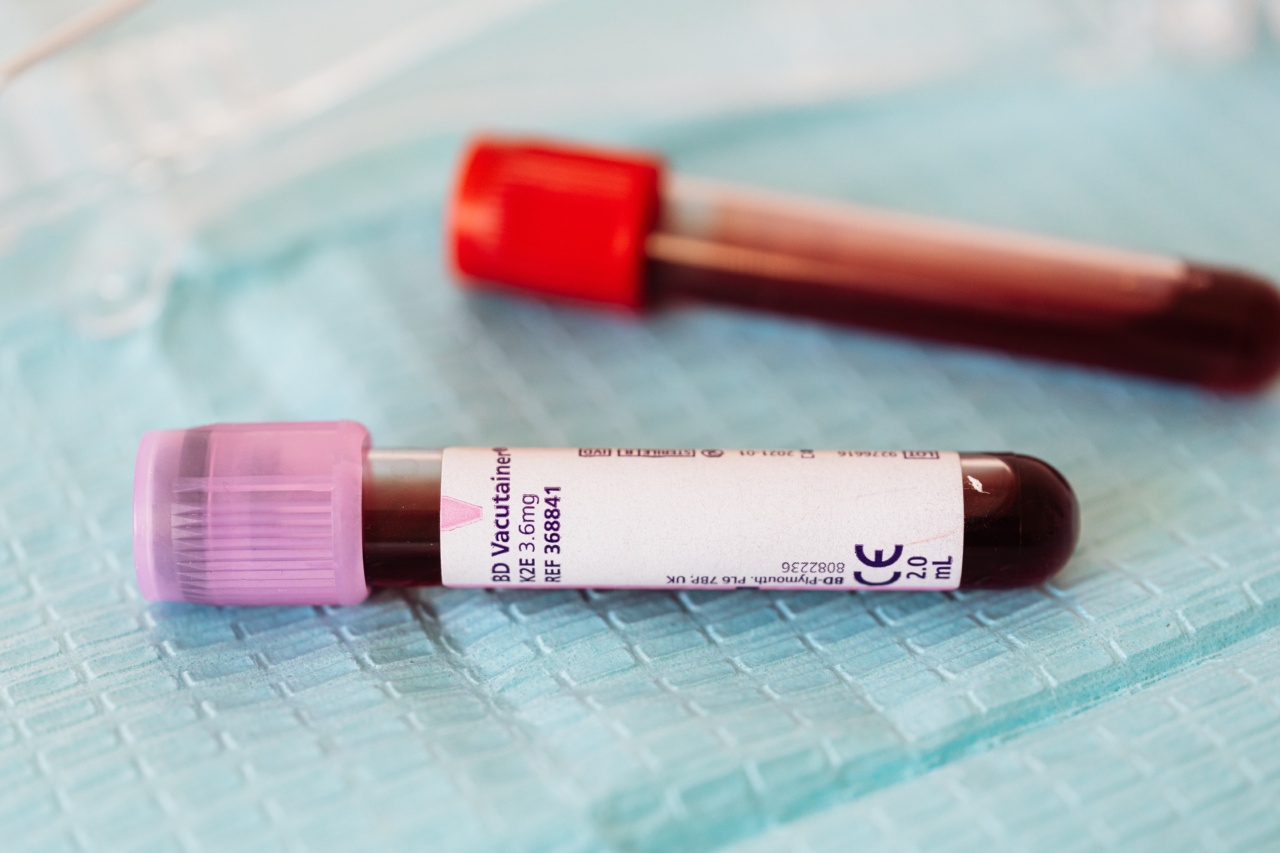
A new study suggests that a simple blood test could help detect Alzheimer’s disease earlier and more accurately.
What is the Blood Test?
The blood test measures levels of a protein called neurofilament light chain (NfL), which is released into the blood as brain cells die.
NfL has been identified as a potential biomarker for a range of neurological conditions, including Alzheimer’s disease.
The new study, conducted by researchers from the Washington University School of Medicine in St. Louis, found that NfL levels in the blood could predict brain changes associated with Alzheimer’s disease years before symptoms appeared.
The study involved 174 participants aged 50 and older, who were followed for an average of four years.
The researchers found that participants with high blood levels of NfL at the start of the study were more likely to show signs of brain atrophy and cognitive decline over the following years.
The study also found that changes in NfL levels over time corresponded with changes in brain volume and cognitive function.
Advantages of the Blood Test
The blood test has several advantages over other methods of detecting Alzheimer’s disease. It is non-invasive, which means it does not require taking a sample of brain tissue or cerebrospinal fluid.
It is also less expensive than brain imaging and other diagnostic tests.
Another advantage of the blood test is that it could be used to screen people for Alzheimer’s disease before symptoms appear.
This would allow for early interventions that could slow down the progression of the disease and improve outcomes for patients.
Related Article
Blood test may detect Alzheimer’s disease sooner

Limitations of the Blood Test
While the blood test holds great promise for the early detection of Alzheimer’s disease, it is not without limitations.
One of the main limitations is that high levels of NfL are not specific to Alzheimer’s disease and can be found in other neurological conditions.
Another limitation is that there is no agreed-upon threshold for what constitutes a positive or negative result. The study used a threshold of 16.2 picograms per milliliter (pg/mL) of NfL to identify participants with high levels of the protein.
However, more research is needed to establish the best threshold for clinical use.
The Future of Alzheimer’s Detection
The blood test for Alzheimer’s disease is still in the early stages of research and development.
However, the results of the Washington University study are promising and suggest that the blood test could play an important role in the early detection of Alzheimer’s disease.
The next step in the research is to replicate the findings in larger and more diverse samples. This will be essential for determining the generalizability of the test and establishing its sensitivity and specificity.
As research into the early detection of Alzheimer’s disease continues, the hope is that more accurate and less invasive methods of diagnosis will become available.
This would allow for earlier interventions and better outcomes for patients and their families.
Conclusion
Alzheimer’s disease is a devastating condition that affects millions of people around the world.
The prospect of early detection through a simple blood test is an exciting development that could have a significant impact on the lives of those affected by the disease.
While the blood test is not without limitations, it offers several advantages over other methods of detecting Alzheimer’s disease.
With further research, the hope is that the blood test will become a routine part of Alzheimer’s disease diagnosis and lead to earlier interventions and better outcomes for patients.


